
The Valley as a Living Archive
Legado en los huesosThis flow traces how local landscape, inherited custom, and folklore turn Baztán from backdrop into an active archive of historical violence and competing forms of belonging.
increasing Bearing strength in each event
 decreasing
Bearing strength in each eventdecreasingA Valley of Returns
Place as Memory
Home and Exile
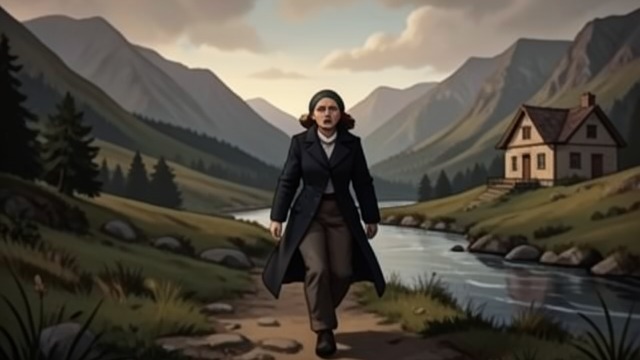
Amaia’s return to Elizondo is never only a change of location. The valley holds the home of her childhood, the people who sheltered her, and the fear that made her leave; each familiar street carries more than one emotional history.
Her visits to Engrasi’s house offer safety, while the surrounding landscape remains capable of reopening old wounds. The same place can be refuge and threat because memory is attached not merely to buildings but to the relationships that unfolded within them.
A Landscape That Keeps Score
The Baztán River, the woods, and the steep roads shape how people move, hide, and encounter one another. In the investigation, the terrain matters materially, but its repeated appearance also gives violence the feeling of something embedded in local memory.
The valley is not presented as inherently evil. Rather, it is a place where beauty, isolation, history, and silence coexist, making it possible for both protection and concealment to take root.
Old Exclusion, New Protest
A History at the Church Door
The Agotes’ Exclusion
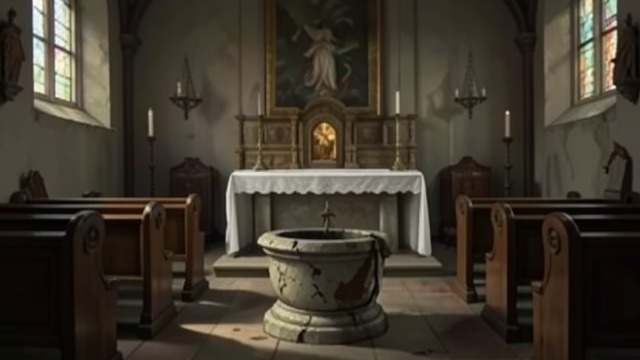
The desecrations at Arizkun Church acquire meaning through the history of the Agotes, who were segregated for generations and denied equal access to religious spaces. Separate baptismal arrangements, restricted seating, and barriers within the church turned social contempt into visible architecture.
The damaged baptismal font, front pew, and altar coverings echo those old exclusions. The attacks therefore cannot be understood only as vandalism: their targets invoke a history that some residents still find painful to name.
Memory as a Weapon
Beñat Zaldúa’s blog insists that historical injustice does not become harmless merely because time has passed. His conviction is morally serious, even as an adult manipulator turns that conviction into a route toward criminal acts.
The episode distinguishes remembrance from retaliation. Recovering the past can expose inherited injustice, but a grievance can also be exploited by someone who wants a useful accomplice rather than a just account.
The Roofline Boundary
A Household Beneath the Eaves
The Family Burial Ground
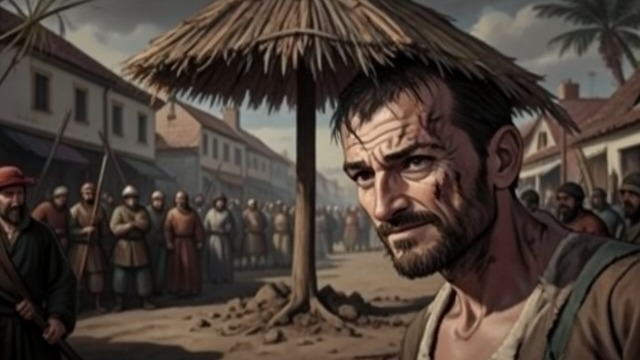
Amaia recognizes that the disturbed soil around Juanitaenea marks an itxusuria: a traditional place where unbaptized infants were buried beneath the roofline. The custom makes the house itself part of the family’s relationship with the dead.
The remains are not anonymous archaeological matter to Amaia. They belong to her family, and their placement beneath the eaves expresses a practice of keeping lost children close rather than casting them outside the household’s care.
A Sacred Boundary Violated
The theft of the infant remains converts an intimate custom into a deliberate message. Someone has followed the house’s physical boundary and used its buried dead to provoke Amaia, exposing how local knowledge can be turned into an instrument of threat.
Amaia’s decision not to expose the burial ground to spectacle reflects the custom’s continuing meaning. Protecting the site is both a practical investigative choice and an act of respect for the family grief it contains.
A Flooded Landscape
The River’s Double Meaning
Water as Threat
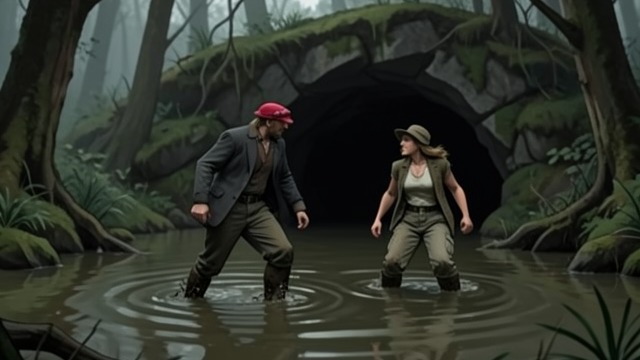
The storm turns the river and its tributaries into immediate physical hazards. Roads close, the current rises, power fails, and the landscape that has guided the investigation becomes difficult to navigate.
The flood also recalls the novel’s repeated language of cleansing. Earlier visions demand that the river be cleaned, but the literal waters offer no simple moral purification; they threaten lives, carry away evidence, and intensify the urgency of rescue.
A Route Through Darkness
Amaia and Jonan Etxaide cross the flooded ground toward the cave by relying on knowledge of paths, bridges, and the forest. The setting is not a supernatural solution to the crisis, yet the landscape’s familiar signals help them continue when ordinary visibility fails.
When Rosario disappears into the current, the river remains morally unresolved. It can conceal, destroy, or carry danger beyond sight, while the people who survive must decide how to remember what the water has taken.
Belief Without Denial
The Unsettled Sacred
Folk Knowledge and Caution
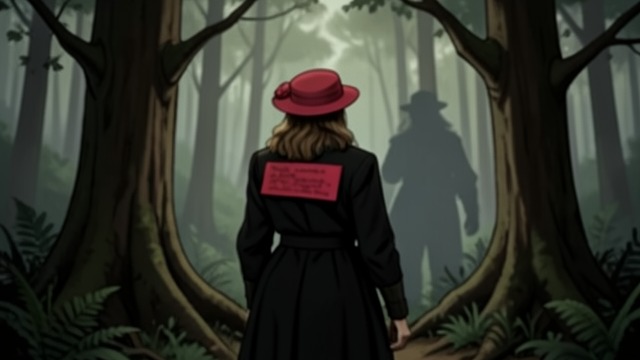
The story gives local traditions practical and emotional force without making every supernatural interpretation provable. Warnings about spirits, offerings, and dangerous thresholds shape how Amaia and her family understand events, while police work continues to depend on observation, testimony, and material evidence.
Amaia’s experience at Mari Hill and Cave complicates her skepticism. The forest appears to answer her call, but the encounter does not become a laboratory finding; it remains a personal event that changes her sense of the valley.
Neither Certainty Nor Dismissal
The inherited formula against affirming or denying supernatural beings captures the novel’s refusal of easy resolution. Belief may preserve attention to experiences that formal institutions overlook, while categorical certainty can make a person vulnerable to manipulation.
By the end, Amaia has learned to live beside uncertainty without surrendering judgment. The supernatural may be present, imagined, or inseparable from the landscape’s accumulated meanings; what matters is that human responsibility remains real in every interpretation.
At the beginning of Amaia’s return to Elizondo
During the inquiry into the first desecrations at Arizkun Church
When the disturbed burials are found around Juanitaenea
During the final storm and pursuit through the valley
Near the ending, after the cave rescue and flood
